Beyond the Buzzwords: How AI, ML, and DS Actually Power Modern Companies
You’ve surely heard about Artificial Intelligence (AI), Machine Learning (ML), and Data Science (DS). But many people are still confused about their differences and the specific role each plays in a company. You’re not alone. AI, ML, and DS aren’t just tech terms — they’re the trio driving smarter business.
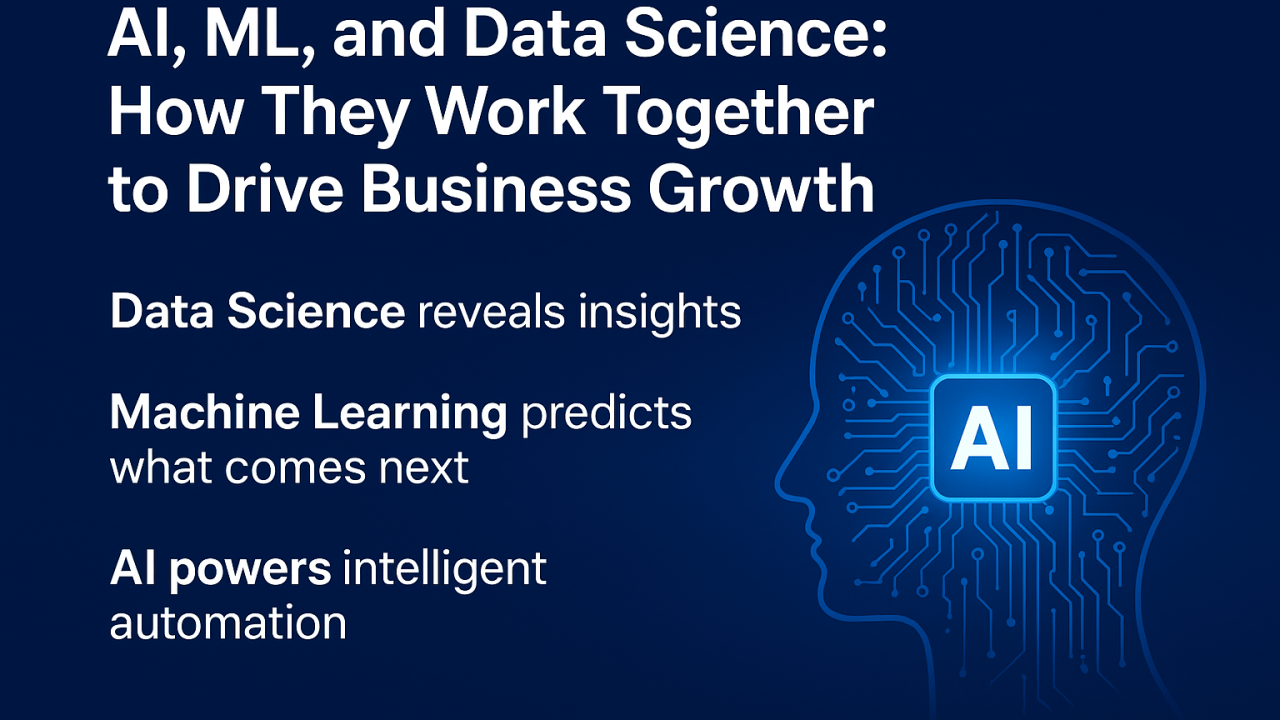
- Data Science reveals insights
- Machine Learning predicts what comes next
- AI powers intelligent automation.
In this post, we’ll explore a practical example to see how AI, ML, and DS work together to create powerful solutions that drive business growth.
Let’s clear up the roles.
- Data Science is about extracting insights from data. It’s the process of cleaning, analyzing, and interpreting data to answer business questions.
- Machine Learning uses those insights to create predictive models. It can detect patterns in data and make forecasts, recommendations, or decisions automatically.
- Artificial Intelligence applies those predictive models and automates intelligent behavior. It allows systems to act or respond in ways that simulate human decision-making.
In short: DS discovers, ML predicts, AI acts.
A Practical Example: Online Bookstore Recommendations
Imagine an online bookstore — think of platforms like rokomari.com. One of the most impactful features such platforms provide is personalised book recommendations. When a user selects a book, the system should suggest other books that align with their taste. Here’s how AI, ML, and DS work together to make this happen:
1. Data Science: Understanding the User
The first step is to collect and analyze data. This includes:
- Purchase history of all users
- Browsing behavior (clicks, time spent on pages)
- Book categories, authors, ratings, and reviews
A data science team cleans this data and runs analyses to find patterns and correlations. For example, they might discover that users who buy a particular fantasy novel often buy a certain science fiction series next. These insights form the foundation of the recommendation system.
2. Machine Learning: Predicting the Next Choice
With these insights, the next step is machine learning. ML models take historical patterns and predict what a specific user might like next. Techniques include:
- Collaborative filtering: Recommending books based on similarities between users.
- Content-based filtering: Recommending books similar to ones the user has already chosen.
- Hybrid models: Combining both approaches for better accuracy.
For instance, if a user just bought “The Hobbit,” the ML model might predict they are likely to enjoy “The Lord of the Rings” or “Harry Potter,” even if they haven’t expressed direct interest in those titles yet.
3. Artificial Intelligence: Delivering Recommendations in Real-Time
Finally, AI integrates the ML model into the bookstore’s platform. When a user selects a book, the AI system provides real-time suggestions:
- Displaying related books on the product page
- Sending personalized emails or app notifications
- Dynamically updating recommendations based on recent activity
AI ensures the experience is seamless, personalized, and constantly improving as it learns from new data.
The Business Impact
By combining DS, ML, and AI, the bookstore can:
- Increase user engagement
- Boost average sales per customer
- Improve retention by offering relevant suggestions
This trio doesn’t just benefit bookstores. Every industry — from e-commerce and finance to healthcare — can leverage DS, ML, and AI to make smarter decisions, predict trends, and automate intelligent actions.
Key Takeaways
- Data Science: Find patterns in data.
- Machine Learning: Predict the future based on patterns.
- AI: Apply predictions to automate intelligent actions.
Thank you 😊